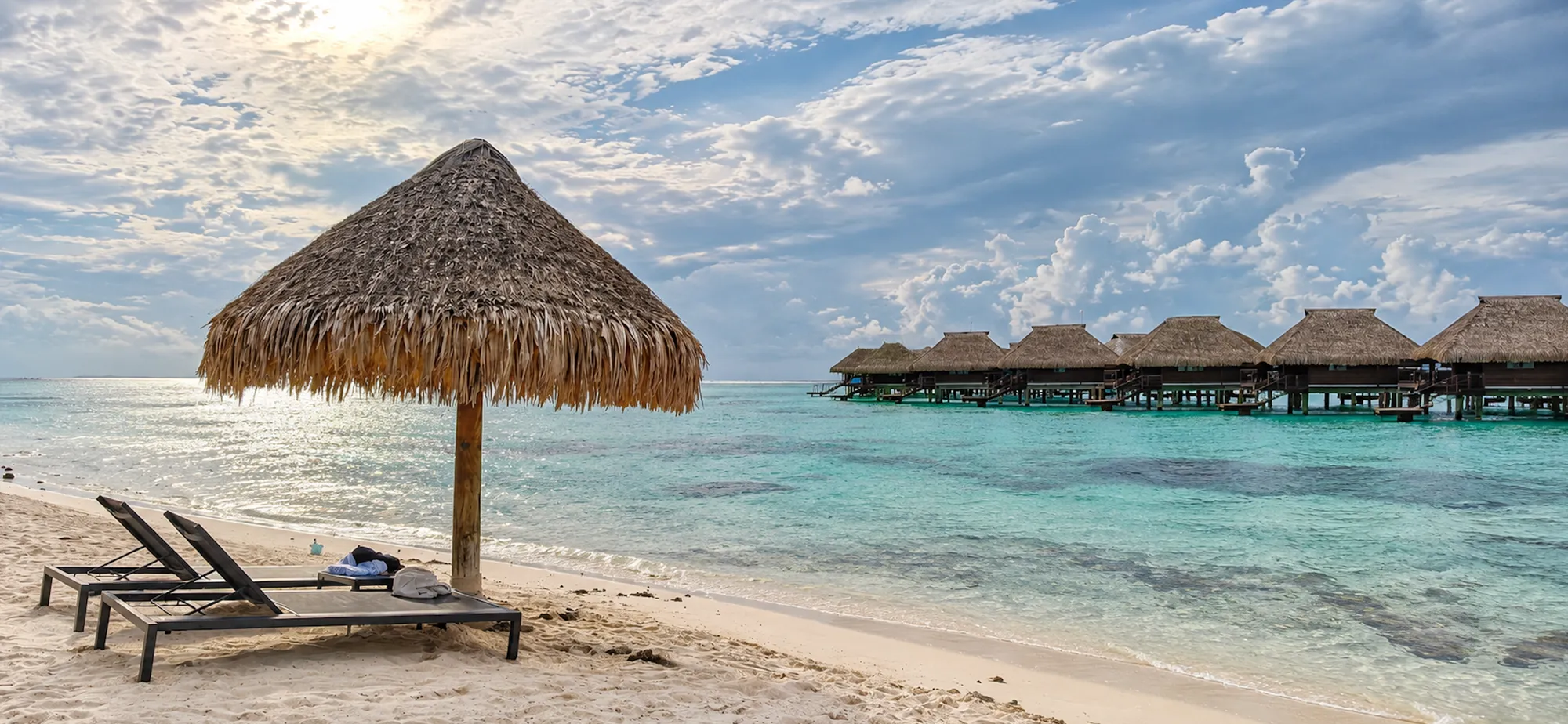
Mini Life Mo’orea: No Nest is Better Than an Empty Nest
Seven weeks was long enough to develop habits. Slow mornings, early nights, the same swim at the same hour, the same faces at the places we kept returning to. Ordinary days that somehow became extraordinary.
We decided no nest sounded better than an empty nest.
After ten years in New Zealand, three daughters, multiple careers, a business I started at our kitchen table during lockdown and a lifetime of moving around, buying another house and settling down didn't feel particularly appealing. Our youngest was heading off to university, and instead of putting down permanent roots, we wondered what would happen if we did the opposite.
So we sold our cars, gave away a lot of our things, packed the rest into storage and decided to be in our twenties again, only this time as digital nomads.
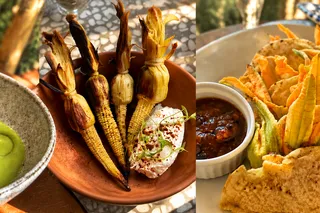
The plan was simple: spend a couple of months in a place, long enough to actually live there rather than visit. Rent a house. Find the supermarket. Figure out where to buy good bread. Cook with what's growing locally. Develop a few favorite places. Settle into the rhythm of ordinary life.
Mo‘orea was our first mini-life.
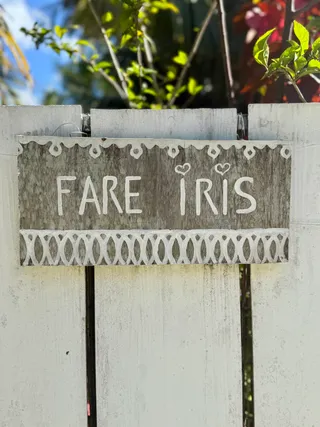
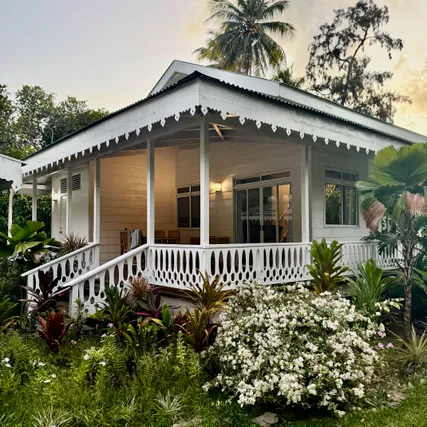
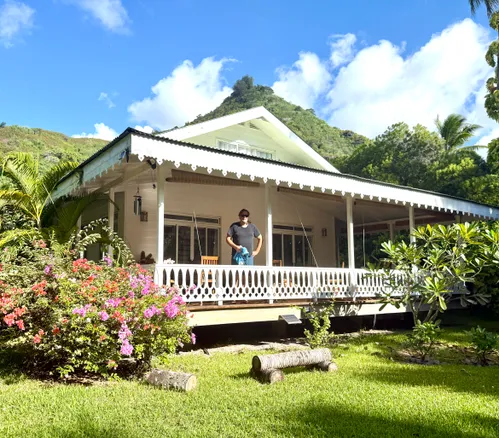
We spent seven weeks on the island, most of them in a little rental called Iris Fare, and I fell for it immediately.
It had the bones of a classic New Zealand villa, all fretwork and charm, but someone had picked it up and dropped it into the tropics: a wide lanai for afternoon drinks, palms and flowers everywhere, and across the road, a second little house right on the water.
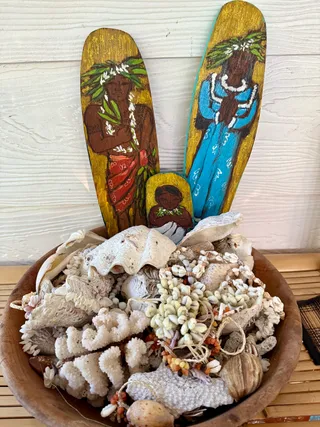
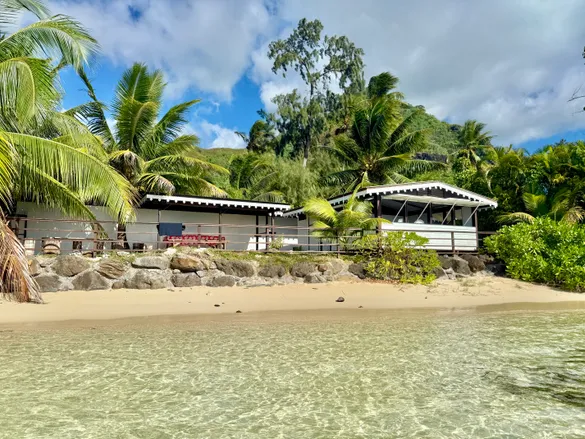
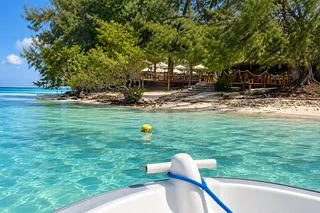
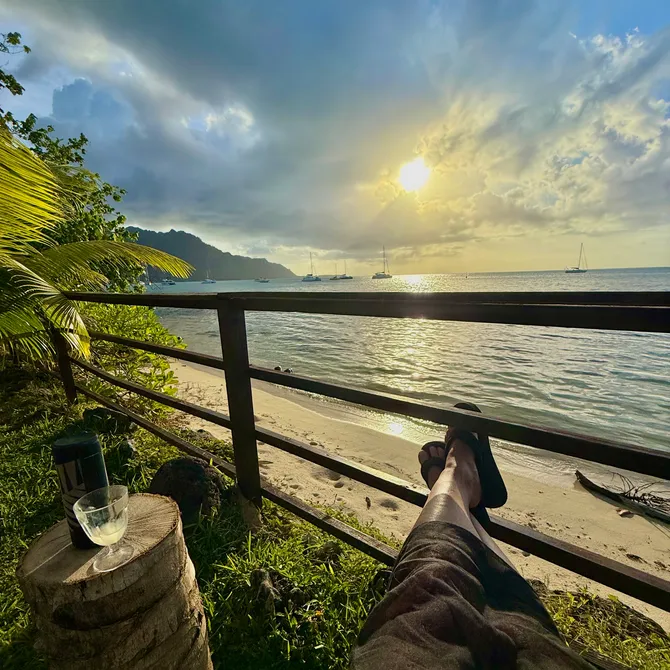
That shack became our afternoon headquarters. Most days, sometime around four, we'd wander across, swim in the lagoon and fire up the grill. We ate outside as the sun dropped behind the mountains and the water changed color with the fading light, then moved to the lanai with a drink to listen to the evening settle in.
It didn't feel like a holiday anymore. It felt like home, with a routine, albeit a pretty divine one.
Mo‘orea is often called "Tahiti's little sister," but that doesn't quite capture it. It's a short ferry ride across the Sea of the Moon from Pape‘ete, yet once you leave the ferry behind, it feels surprisingly far away.
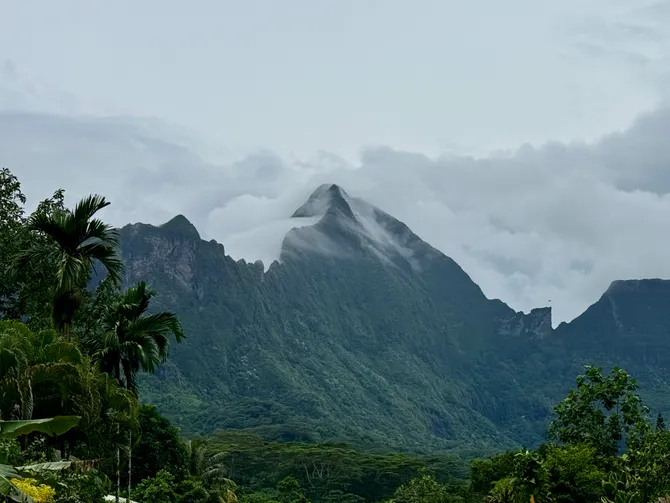
The island is what's left of an enormous volcano, and its jagged green peaks rise almost vertically from the lagoon.
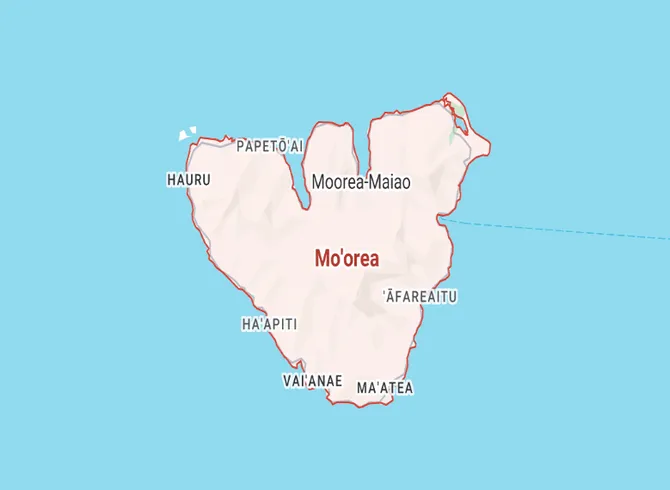
From the air, Noah thinks it looks like an angel. I see a cartoon ghost with its arms raised, mid-"boo!" Whatever you see, it's spectacular, ringed by reef and water that moves through every shade of blue: pale aqua, turquoise, cobalt, deep indigo.
There's one main road around the island, and after a while you stop thinking of it as a road and start thinking of it as your neighborhood. The same dogs asleep on the verge. The same people heading to work. The same fruit stands appearing each morning. The same mountain showing up between the trees at every bend.
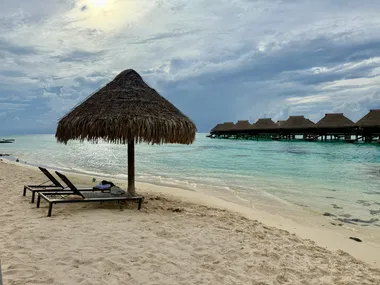
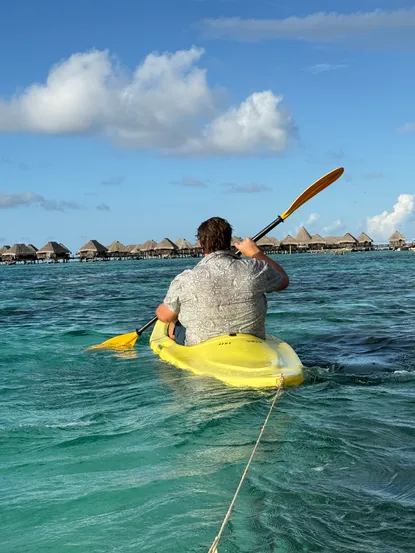
We built our own little routines. Wednesday and Friday nights were drinks at the Hilton, five minutes away. Sometimes we kayaked there, which made cocktails feel considerably more virtuous than they were.
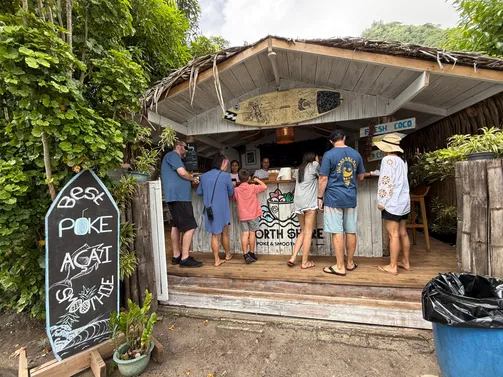
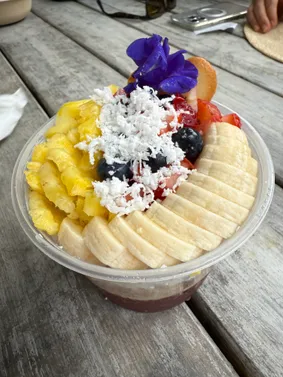
Lunch was often at North Shore Poke and Smoothie Bar, around the corner, where we became regulars for poke bowls, smoothies, and açaí, or at Moorea Tropical Garden for poisson cru.
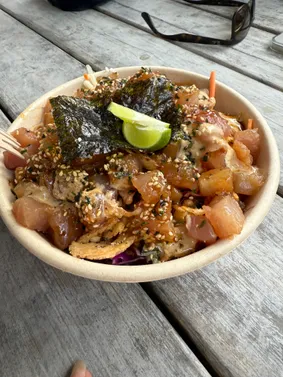
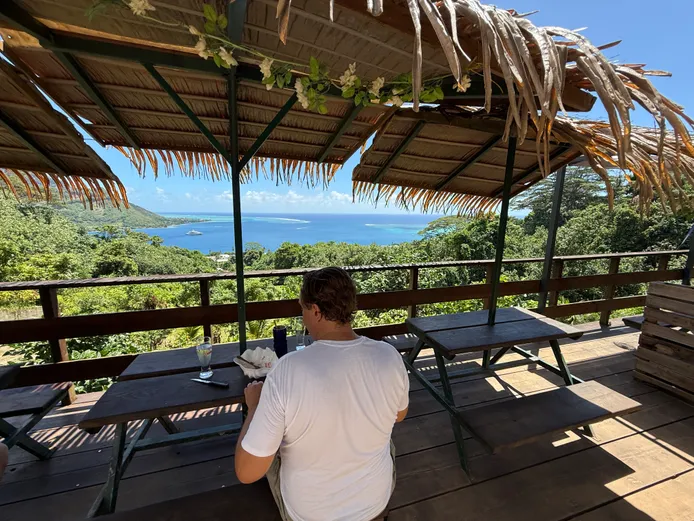
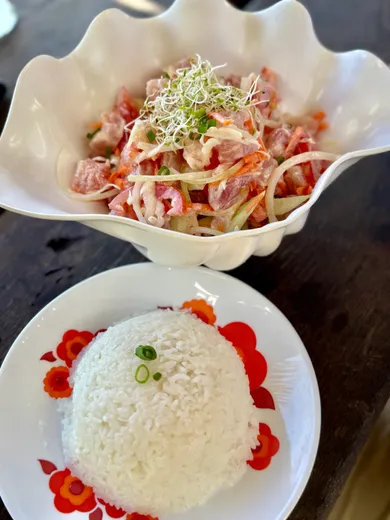
You don't need twenty restaurants when you live somewhere. You need three go-tos, three places where they smile when they see your face.
You don't need twenty restaurants when you live somewhere. You need three go-tos, three places where they smile when they see your face.
On weekends we drove into Vaiare, the main ferry port, for the big shop at Champion: baguettes, fruit and whatever we planned to grill that week.
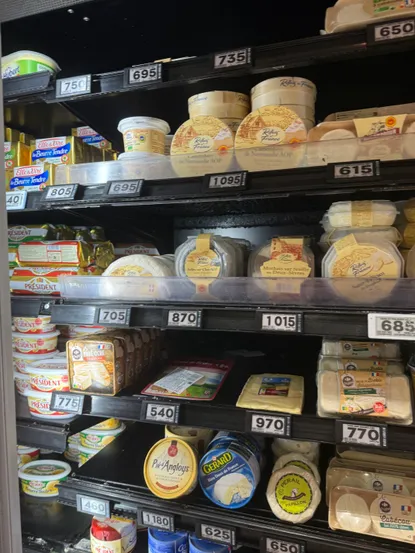
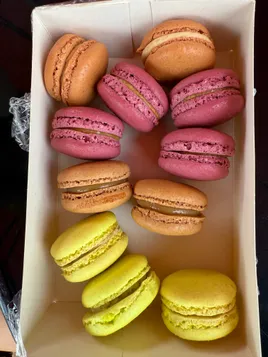
And because this is French Polynesia, grocery shopping came with macarons.
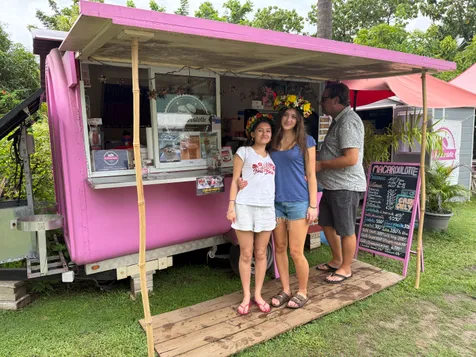
Near the ferry sits La Macaroulotte, a tiny pink trailer by the sea selling homemade macarons, cakes and its famously extravagant Cakeshakes. We'd buy a box and eat them in the car on the way home, which turned an errand into a Sunday outing.
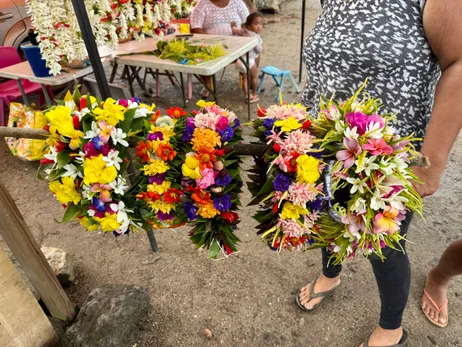
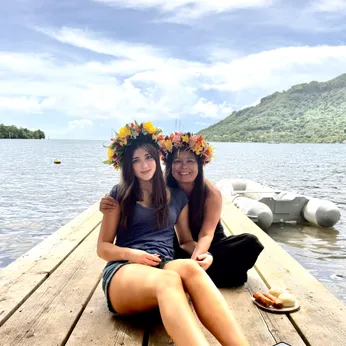
Across from the terminal, women sell flower crowns, and buying them for family and friends when they arrived became one of my favorite rituals.
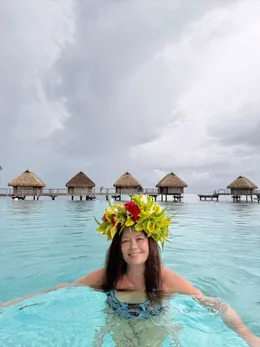
The island starts early. Fishermen are out before sunrise, bakery vans deliver fresh pastries, and by six the supermarkets are busy with people buying the day's bread. There's no daylight saving and the sun sets around six year-round, so by eight, going to bed seemed completely reasonable. There are no clubs, no thumping bass into the small hours. If you want that, the ferry back to Pape‘ete is right there.
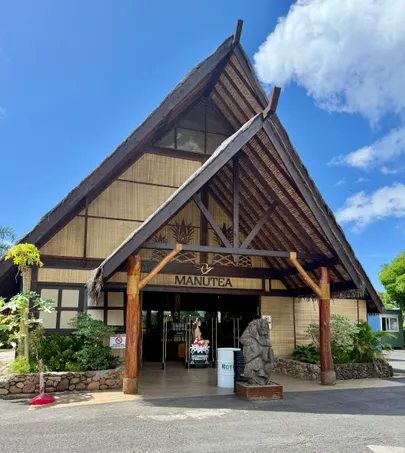
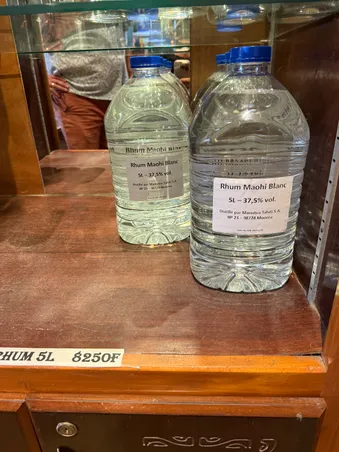
At the foot of Mount Rotui, between Cook's and Opunohu Bays, is Manutea, a distillery making agricole rum from Tahitian sugarcane. Somewhere along the way I discovered you can buy it in five-litre bottles. I find this information both useful and slightly dangerous.
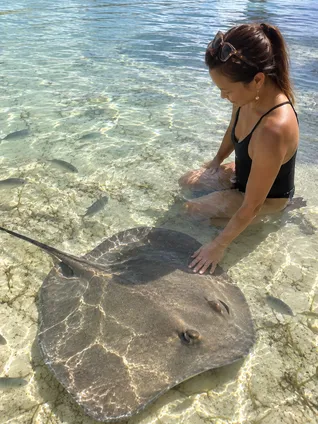
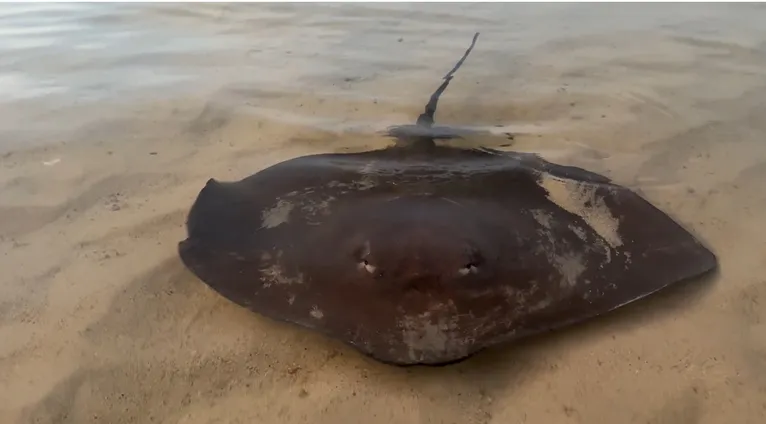
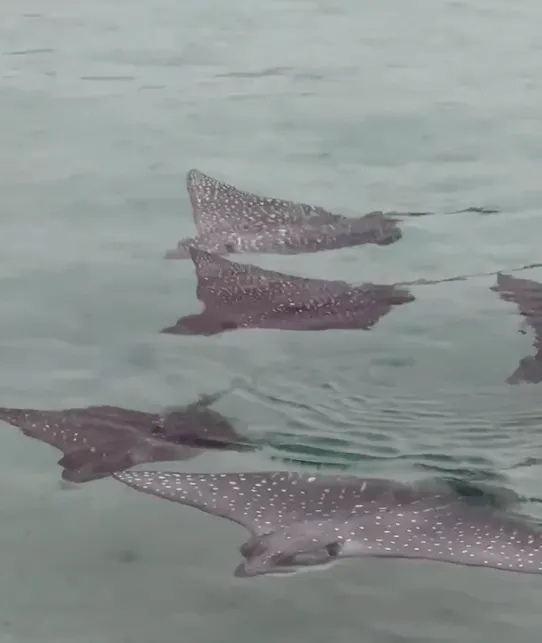
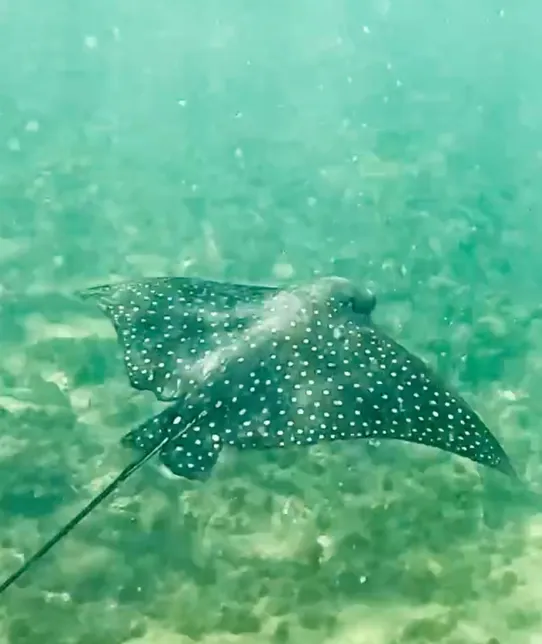
Our only real local friends, if I'm honest, lived in the lagoon. There was beautiful Sophie, a stingray roughly my age and a complete cuddle bunny, who lives in the channel off Coco Beach. There was Eddie, a long-tailed stingray who lived in the water off Iris Fare and seemed to expect a greeting whenever we crossed paths. Over at the Hilton, a gang of spotted eagle rays regularly glided through the lagoon. And at Te Honu Iti in Cook's Bay, three nurse sharks always zigzagg beneath the tables at dinner time.
Seven weeks was long enough to develop habits. Slow mornings, early nights, the same swim at the same hour, the same faces at the places we kept returning to. Ordinary days that somehow became extraordinary.
And somewhere in all that, missing our day-to-day life with kids became a little less unbearable.